Classroom example Tangent Design Engineering
Show your class · 1 of 5
The questionShow your class · 2 of 5
How it worksShow your class · 3 of 5
Who does this workShow your class · 4 of 5
Ways inShow your class · 5 of 5
Ask the classFor you
About Tangent Design EngineeringFor you
SourcesWhy does a process that works in a lab need a new design at larger scale?
Tangent Design Engineering · Calgary consultancy and documented prototype build in its shop; the case study is undated.
Where it fits
Pick your class- Chemistry 20 · Quantitative relationships and process scale
How it works
Schematic · not to scale
Scale changes the engineering problem
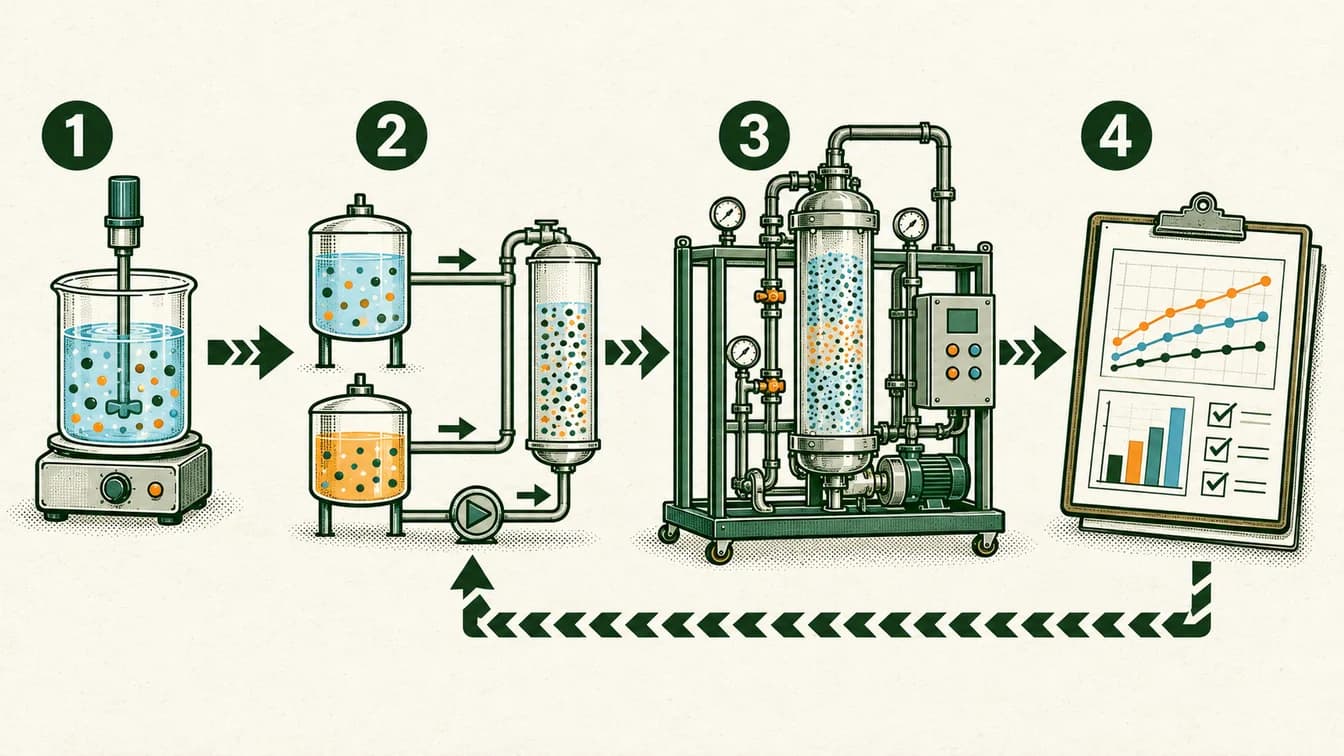
Start with a process demonstrated at laboratory scale.
Plan flow, equipment and control needs.
Build a larger demonstration system.
Use testing to revise the design.
Charts are illustrative, not company results. The generic skid illustrates the documented Katal scale-up case; it is not a drawing of the actual machine.
The lesson, in the real world
A working laboratory process still needs a design for the field.
- 1
Katal had demonstrated a process in the laboratory but needed a larger system for testing and demonstration.
Our explanation - 2
Tangent’s case study describes using process-flow and piping-and-instrumentation diagrams to plan the equipment and controls.
Our explanation - 3
A multidisciplinary team designed and assembled a transportable skid, accounting for control, safety and packaging constraints.
Our explanation - 4
The prototype provided a platform for further testing. Building a demonstration does not by itself establish commercial performance or environmental benefit.
Our explanation
Who does this work
Roles documented at Tangent Design Engineering
What each kind of work involves, the job titles to look for, and where to find postings in Calgary.
Process engineering
Turn a useful transformation into a workable sequence of equipment and operating steps. Process engineers consider what enters, what leaves and what conditions the system must maintain.
Classroom connection
Conservation of matter and energy connects classroom calculations to process decisions.Job titles to search
Process engineer · Chemical engineerWork area · The case names process engineers and flow-diagram work.Instrumentation and controls
Keep a process measurable and responsive. Controls work connects sensors, decisions and actuators so the system can respond when conditions change.
Classroom connection
Feedback uses a measured result to inform the next action.Job titles to search
Instrumentation technician · Controls technician · Controls engineerWork area · Electrical engineering and fine process control are described; role label is editorial.Industrial machinery assembly and maintenance
Make machinery work together as a physical system. Millwright work connects assembly, alignment, inspection and troubleshooting.
Classroom connection
Small alignment errors can change how forces and motion pass through a machine.Job titles to search
Millwright · Industrial mechanicWork area · The case explicitly identifies in-house millwrights and shop assembly.
Cards distinguish work documented at Tangent Design Engineering from related work at other employers. Dated accounts and postings are not a current staff roster or a promise of a vacancy.
Ways in
For your students
Ways to prepare for this work
Programs that teach skills this work uses. Each is one route in, not a requirement, and no program has endorsed this page.
University of CalgaryBachelor’s degreeCalgary
Chemical Engineering
Study how to transform raw materials and design production processes.
About this route
Check the provider’s current prerequisites and intake availability. This is a related learning route, not a hiring promise or an employer requirement.
Why it connects to the work · our interpretation
Process engineeringSupports process design and scale-up; experience and professional requirements remain separate. Conservation of matter and energy connects classroom calculations to process decisions.
Instrumentation and controlsSupports process design and scale-up; experience and professional requirements remain separate. Feedback uses a measured result to inform the next action.
SAITDiplomaCalgary
Instrumentation Engineering Technology
Work with measurement devices, calibration and automated process controls.
About this route
Check the provider’s current prerequisites and intake availability. This is a related learning route, not a hiring promise or an employer requirement.
Why it connects to the work · our interpretation
Instrumentation and controlsSupports process testing, troubleshooting and control systems. Feedback uses a measured result to inform the next action.
SAITApprenticeshipCalgary
Industrial Mechanic (Millwright)
Learn to install, maintain and repair industrial machinery.
About this route
Requires apprenticeship registration and workplace training. This is distinct from an engineering degree.
Why it connects to the work · our interpretation
Industrial machinery assembly and maintenanceSupports equipment assembly, alignment and maintenance. Small alignment errors can change how forces and motion pass through a machine.
Ask the class
Use it in class
Ask the class
Why might multiplying every dimension of a laboratory setup by ten fail to produce a workable plant?
Ask students to fit a fictional process into a fixed rectangular footprint while leaving access for maintenance and showing measurement points. Compare designs against the same constraints.
Mindset it shows
Focus on relationships and access, not engineering specifications. The exercise is not a plan for handling hazardous materials or building the Katal process.
About Tangent Design Engineering

A working laboratory process still needs a design for the field.
- Headquarters
- Calgary consultancy and documented prototype build in its shop; the case study is undated.
- Source: Katal project and Calgary shop(opens in a new tab)
- Local connection
- Calgary consultancy and documented prototype build in its shop; the case study is undated.
- Source: Katal project and Calgary shop(opens in a new tab)
- Team size
- Not verified. We have not found a dated, sourced figure.
- The problem
- What has to change when a laboratory process becomes a transportable system?
- Source: Katal project and Calgary shop(opens in a new tab)
- What they do
- Engineering design, prototyping and integration services.
- Source: Katal project and Calgary shop(opens in a new tab)
- Who uses it
- Teams needing to test or demonstrate a technology beyond laboratory scale.
- Source: Katal project and Calgary shop(opens in a new tab)
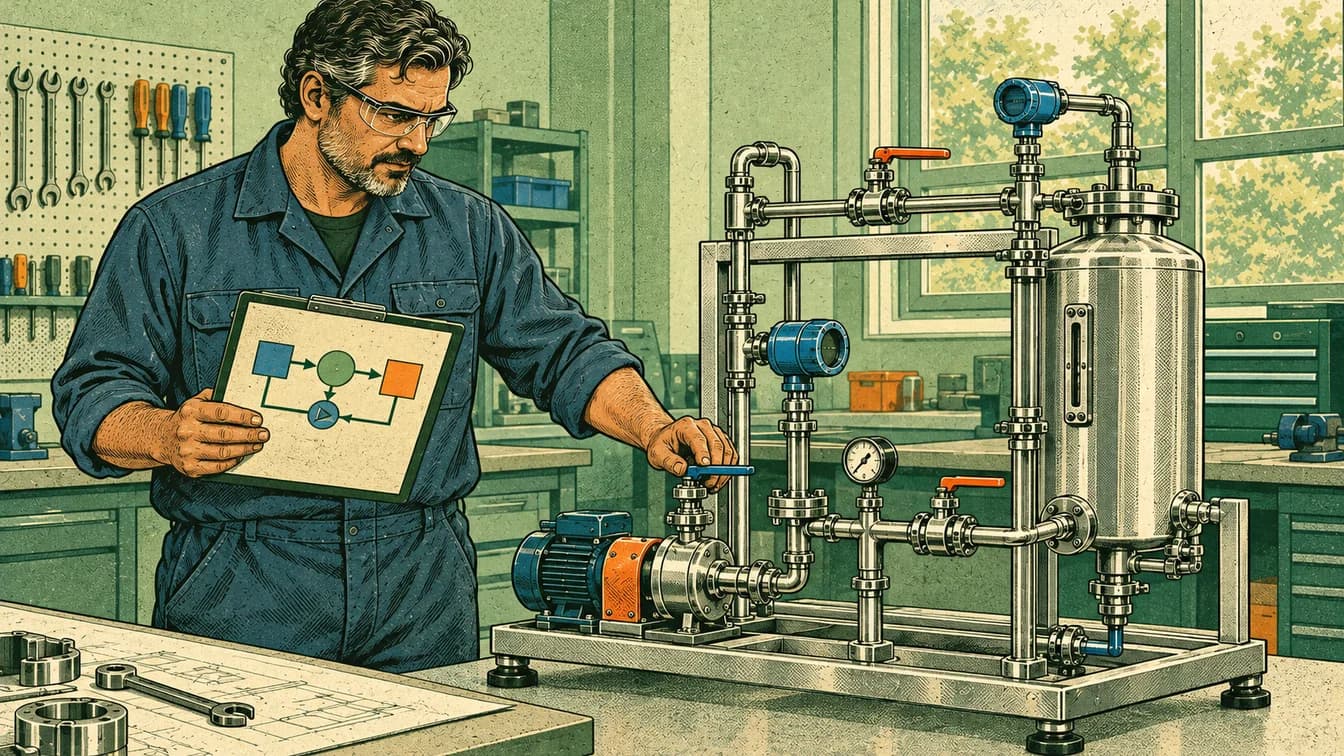
Tangent Design Engineering is a Calgary engineering and design consultancy. Its Katal case study describes designing and building a transportable demonstration skid for a refining process. Mechanical, electrical and process engineers worked with in-house millwrights to develop a controllable prototype that could fit in a shipping container.
Source: Katal project and Calgary shop(opens in a new tab)Read each source’s date and scope: a documented role is not proof of a current vacancy or of where every position is based.
Reported as Tangent Design Engineering states it. Tangent Design Engineering has not reviewed or endorsed this page.
Sources and course fit
Sources checked 15 Oct 2026
Where it fits
- Chemistry 20 · Quantitative relationships and process scale
Editorial mapping to published CBE course topics. Pending educator review. No outcome-code alignment is claimed.
Sources
- Alberta Chemistry 20–30 program of studies (updated 2014)(opens in a new tab)
- University of Calgary — Chemical Engineering(opens in a new tab)
- SAIT — Instrumentation Engineering Technology(opens in a new tab)
- Katal project and Calgary shop(opens in a new tab)
- SAIT — Industrial Mechanic (Millwright)(opens in a new tab)
Organization claims are reported as the organization states them. Tangent Design Engineering has not reviewed or endorsed this page.
What we know, and how
| Type | Claim | How we know |
|---|---|---|
| work | Tangent Design Engineering is a Calgary engineering and design consultancy. Its Katal case study describes designing and building a transportable demonstration skid for a refining process. Mechanical, electrical and process engineers worked with in-house millwrights to develop a controllable prototype that could fit in a shipping container.Source: Katal project and Calgary shop | Organization-stated |
| local connection | Calgary consultancy and documented prototype build in its shop; the case study is undated.Source: Katal project and Calgary shop | Organization-stated |
| course fit | Track material inputs and outputs as throughput grows; engineering layout and controls extend the chemistry rather than replacing quantitative relationships.Source: Alberta Chemistry 20–30 program of studies (updated 2014) | Editorial connection to verified course topics |
| limits | Treat the story as an undated documented project, not a new announcement. Omit the case’s emissions-reduction percentage: the page does not provide the testing needed to substantiate it here.Source: Katal project and Calgary shop | Scope of this example |
Solid green: the organization states it. Outlined: seen in a dated source. Dashed: our interpretation, not yet researched, or announced but not yet real.