
Show your class who in Calgary uses the science they’re learning.
Careers in the Classroom helps Alberta high school science teachers connect the unit they’re teaching to a real Calgary organization, the problem it’s working on and the people doing the work. Choose from 46 examples, each ready to project in class.
From your unit to a real conversation in three steps
- 1
Start from what you teach
Pick your course and unit, or start from a company or a kind of job your students are curious about.
- 2
Open a real Calgary example
Each example starts with a question students can reason about using the science they know, then explains how the organization uses it.
- 3
Project it and talk
Show the example full screen, explore the roles and ways into the work, and finish with a question for the class.
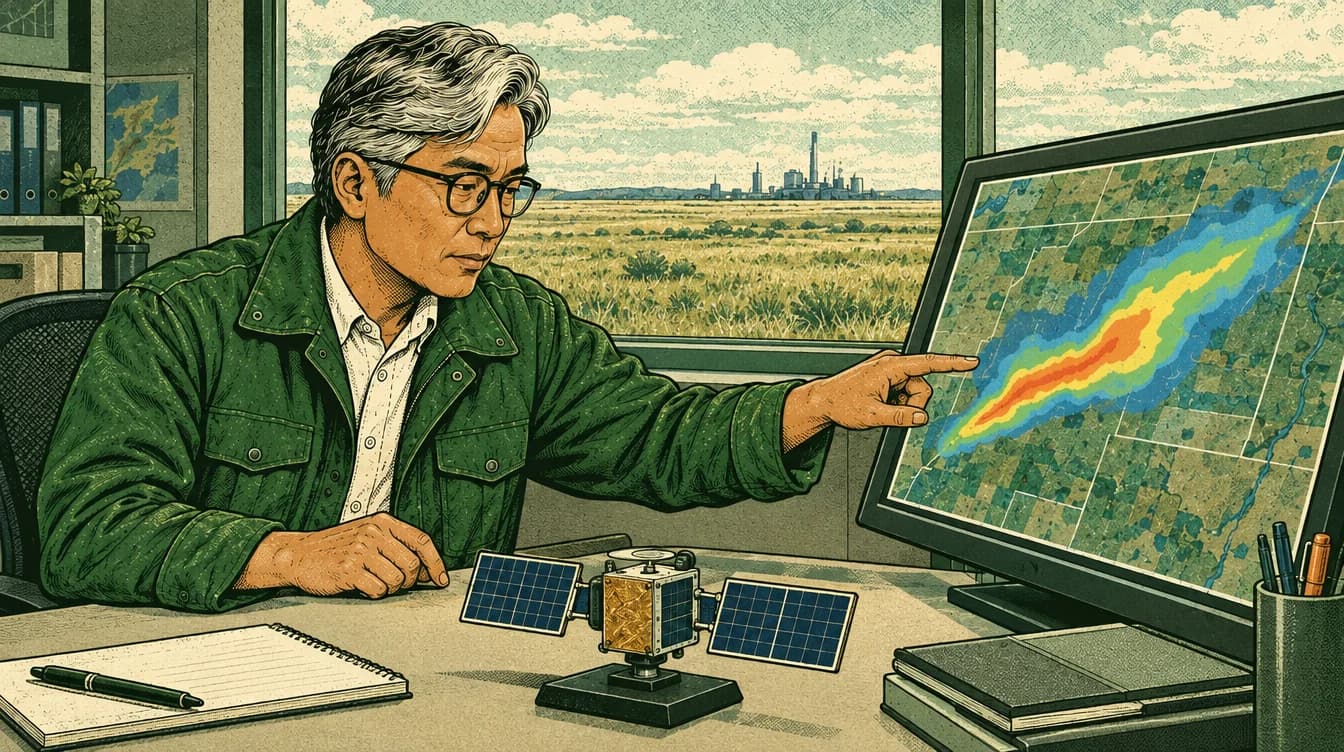
What a class sees: “How can you find an invisible gas from space?”
GHGSat · Lists a Calgary office. Headquarters in Montreal.
- The question
- An opening question tied to your unit.
- How it works
- The science, step by step, with a teaching illustration.
- Who does this work
- Atmospheric science and remote sensing · Satellite and instrument engineering · Software and data · Business development and partnerships
- Ways in
- Local programs and real job postings related to the work.
- Ask the class
- “If a sensor detects no methane, does that prove none is present?”
“When will I ever use this?” deserves an answer from down the road.
Science careers can feel like they happen somewhere else. These examples put the work in Calgary: an office on 5th Avenue, a roastery in the Simmons Building, a field program in southeastern Alberta.
Each one names the kinds of work involved and says what those people do day to day, with programs and job postings students can look up afterwards.
Every claim links to a dated source. We distinguish what an organization says, what we found in a source and our own interpretation.
Where would you like to start?
Next, you choose your unit, and the library shows what fits it best.