Careers in the Classroom
Back to challenges

Classroom example E3 Lithium

Show your class · 1 of 5

The question

Show your class · 2 of 5

How it works

Show your class · 3 of 5

Who does this work

Show your class · 4 of 5

Ways in

Show your class · 5 of 5

Ask the class

For you

About E3 Lithium

For you

Sources

How do you separate something valuable from a complex liquid?

E3 Lithium · Calgary-based company. Clearwater project between Calgary and Red Deer.

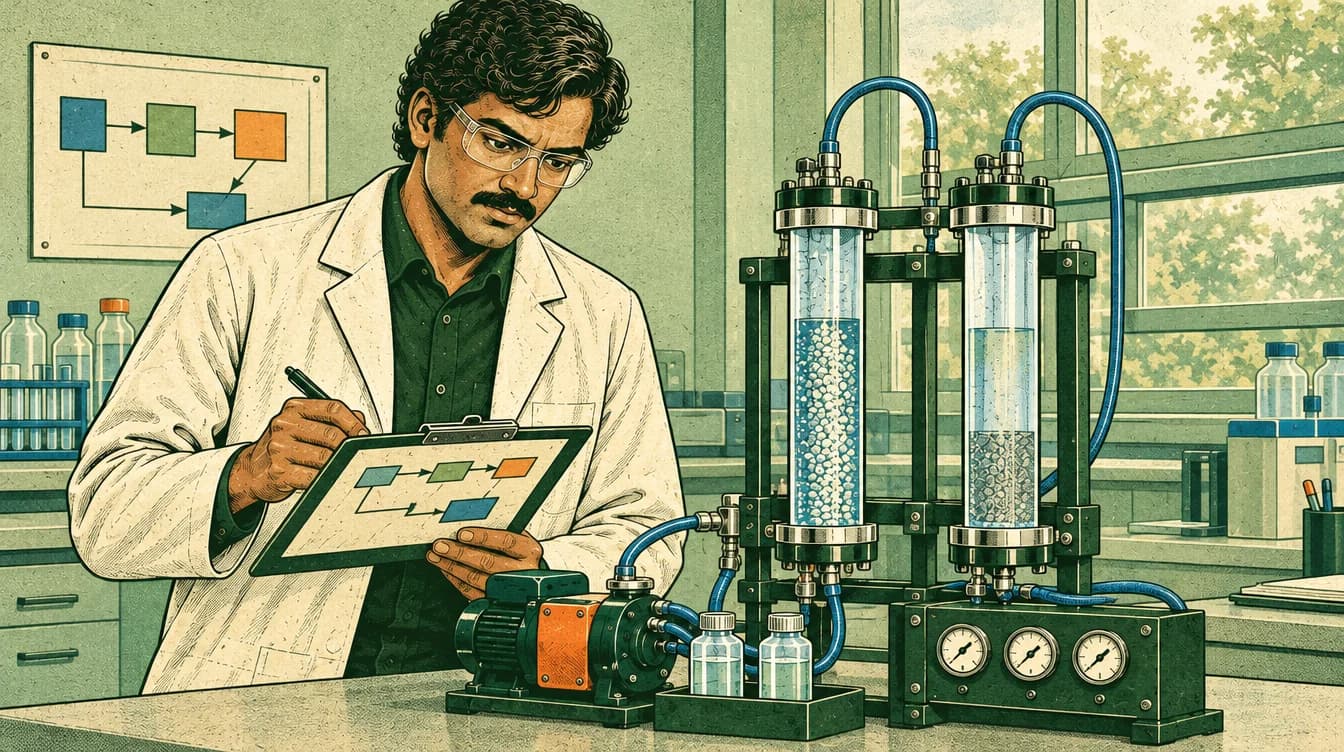
Graphic-novel illustration of a process engineer comparing a flow diagram with two test columns on a laboratory separation rig.

Where it fits

Pick your class
  • Chemistry 20 · Solutions and quantitative chemical change
  • Chemistry 30 · Electrochemistry, as a wider battery connection only

How it works

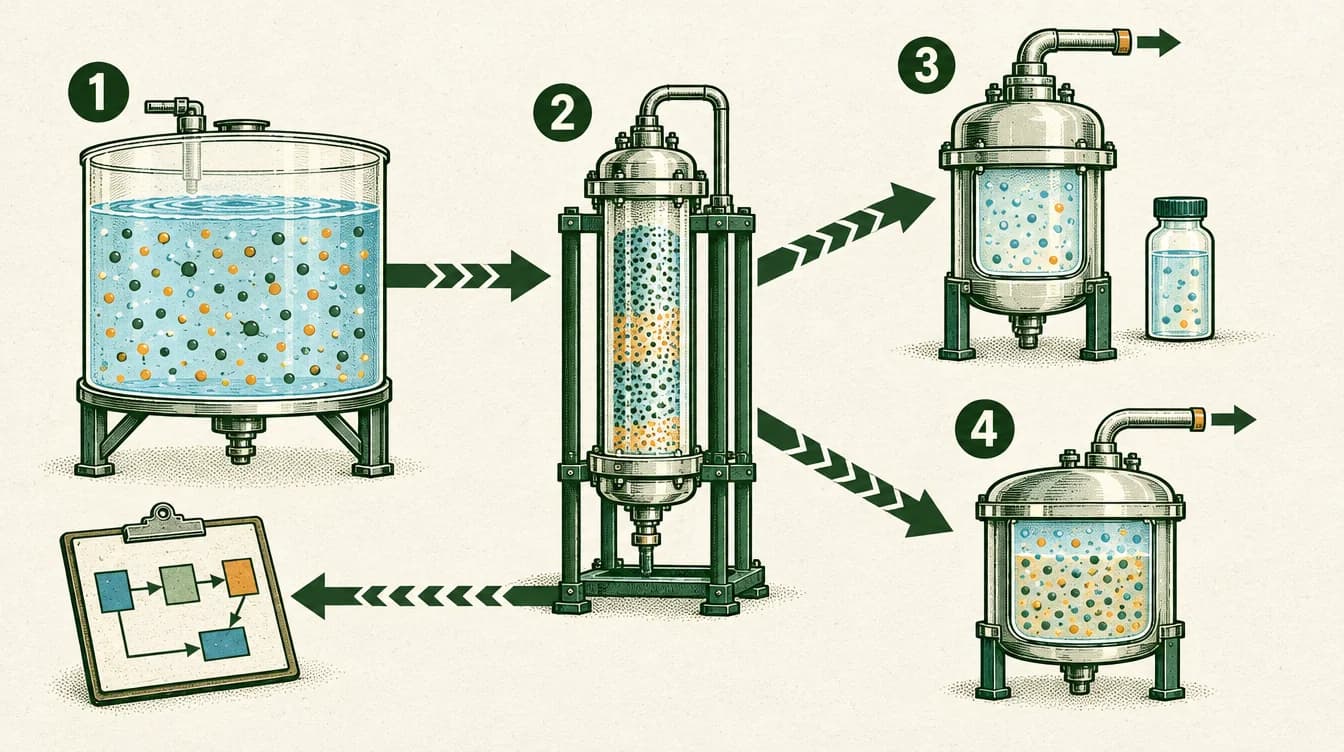
Schematic · not to scale

From mixture to material

A conceptual process flow: mixed brine enters a separation stage; a lithium-rich stream continues to purification and conversion while other material follows a separate outlet. Test results feed back into design. The diagram does not specify E3’s equipment or measured recovery.
  1. Mixed brine contains lithium alongside other substances.

  2. Separation recovers a lithium-rich stream.

  3. Purify and convert toward battery-grade material.

  4. Manage the remaining material in a separate stream.

The return arrow shows test results informing design. Compare recovery, purity, water and energy. The dots represent a conceptual mixture, not particular chemical species or measured amounts.

The lesson, in the real world

A separation has to recover the useful material, reach the right purity and work beyond a small test.

Project stage: Development and scale-up. The planned commercial facility is not operating yet.

  1. 1

    E3’s Clearwater project targets lithium dissolved in underground brine in Alberta.

  2. 2

    Extraction and downstream treatment separate and purify the material. E3’s process role names membrane treatment, ion exchange and crystallization among the methods it evaluates.

  3. 3

    Engineers and operators use models, operating readings and demonstration tests to inform equipment and process design.

  4. 4

    Compare recovery and purity alongside water, energy and reliable operation. A demonstration result does not by itself show that a commercial plant is operating.

    Our explanation
Source: E3 Lithium: company and Clearwater project(opens in a new tab); E3 Lithium: Intermediate Process Engineer(opens in a new tab); E3 Lithium: Shift Operator(opens in a new tab); E3 Lithium: Clearwater status update, 29 September 2026(opens in a new tab)

Who does this work

All roles in this example

Role

Process engineering

Design and test the steps that separate useful materials from a mixture.

Employer posting · experienced engineering roleGeneral explanation, written by usSource: E3 Lithium: Intermediate Process Engineer(opens in a new tab)

Process engineers connect chemistry to equipment and operating conditions. They use calculations, models and test results to decide how a process should work, then help troubleshoot what happens when it is scaled up.

What might you actually do?

  • Compare separation steps

    Evaluate how different treatment stages affect recovery, purity and resource use.

  • Check the balances

    Account for material entering and leaving each stage, using models and measurements.

  • Test and improve

    Use pilot or demonstration results to improve designs and support commissioning.

Typical of this kind of work in general. Not a description of any one person’s job at E3 Lithium.

Often works with
Plant operatorsLaboratory staffEquipment suppliersOther engineers
Classroom connection
Concentration, mixtures and quantitative chemical change become practical questions about recovery, purity, water use and scale.

Related job postings

Similar work at other employers in Calgary, AB, not openings at E3 Lithium. These are live searches: results change daily and we have not checked them.

Saved job examples

How employers have described this kind of work, saved on the date shown. Employers have not reviewed or endorsed this page.

  • Process Engineer in Training- WaterStantec · Calgary, Alberta.Accepting applications
    Employer posting · saved 29 Sep 2026

    Process Engineer in Training- Water

    Stantec

    An engineering consultancy. This role concerns water and wastewater projects, not work for E3 Lithium.

    Source: Stantec: Process Engineer in Training- Water(opens in a new tab)
    Location
    Calgary, Alberta.
    Work arrangement
    Full-time, day shift; office work and possible field activities.
    Experience
    Early-career engineering role: 0–4 years of experience, an engineering degree, and EIT registration or ability to obtain it within six months.

    Help design water and wastewater treatment systems under the guidance of experienced engineers.

    The work, in our words

    • Prepare process calculations, design drawings and technical reports.
    • Use chemical or process models to support design decisions.
    • Help investigate sites and support pilot or construction activities.

    Skills the posting asks for

    Water-treatment principles · Process calculations and modelling · Engineering drawings · Technical communication

    Classroom connection

    Offers an early-career comparison using related treatment and process-design methods in the same city.

    What this example establishes: The employer and project purpose differ from E3; this is not evidence of a lithium role or an E3 partnership.

    Accepting applications when checked 29 Sep 2026

    Original role details rendered; Apply Now opened an email-based application entry form. No information was entered.

    Original posting(opens in a new tab)

How to prepare

  • Chemical Engineering (BSc)

    University of Calgary

  • Chemical Engineering Technology

    SAIT

See all pathways

Ways in

For your students

Ways to prepare for this work

Programs that teach skills this work uses. Each is one route in, not a requirement, and no program has endorsed this page.

Showing routes for process engineering. Show all

  • University of CalgaryUniversity degreeCalgary

    Chemical Engineering (BSc)

    Engineering foundations, process design and a final-year team design project, with an internship opportunity.

    About this route

    An undergraduate engineering route. The Stantec job example asks for a relevant degree and EIT registration or eligibility; E3’s role additionally asks for substantial experience.

    Why it connects to the work · our interpretation

    Process engineering

    Designing and evaluating chemical processes provides a foundation for separation, water treatment and scale-up work.

  • SAITTwo-year diplomaCalgary

    Chemical Engineering Technology

    Practical work in unit operations, process simulation, equipment design and safe operation of processing units.

    About this route

    A technology diploma is a distinct route from an engineering degree; it does not replace a posting’s engineering-degree requirement.

    Why it connects to the work · our interpretation

    Process engineering

    Process calculations and simulation support technical work alongside engineers.

Ask the class

Use it in class

Ask the class

If two separation methods recover different amounts of lithium but use different amounts of water and energy, what would you need to compare before choosing one?

Separating a useful substance is only part of the challenge. A process also has to work repeatedly, at a useful scale, with acceptable resource use and cost.

Mindset it shows

Optimize across competing constraints rather than one number.

About E3 Lithium

Developing a route from Alberta brine to battery-grade lithium carbonate.

Local connection
Clearwater lies between Calgary and Red Deer. The operator job example is for the demonstration facility east of Olds and Didsbury; the engineering posting is based in Calgary.
Source: E3 Lithium: company and Clearwater project(opens in a new tab); E3 Lithium: Shift Operator(opens in a new tab); E3 Lithium: Intermediate Process Engineer(opens in a new tab)
Team size
Not verified. We have not found a dated, sourced figure.
The problem
Lithium is dissolved in underground brine alongside other substances. Producing a battery material requires extraction, purification and conversion, with a process that can work at larger scale.
Source: E3 Lithium: company and Clearwater project(opens in a new tab); E3 Lithium: Intermediate Process Engineer(opens in a new tab)
What they do
A planned supply of battery-grade lithium carbonate from Alberta brine. This is a development project, not an operating commercial plant.
Source: E3 Lithium: Clearwater status update, 29 September 2026(opens in a new tab)
Who uses it
Prospective battery-material customers. E3 reports discussions and non-binding agreements with potential supply partners; these are not completed sales.
Source: E3 Lithium: Clearwater status update, 29 September 2026(opens in a new tab)

E3 Lithium is developing the Clearwater lithium project in Alberta. It is using demonstration operations and engineering studies to develop a commercial facility.

Source: E3 Lithium: company and Clearwater project(opens in a new tab); E3 Lithium: Clearwater status update, 29 September 2026(opens in a new tab)
Who does this work

Read each source’s date and scope: a documented role is not proof of a current vacancy or of where every position is based.

Reported as E3 Lithium states it. E3 Lithium has not reviewed or endorsed this page.

Sources and course fit

Sources checked 24–29 Sep 2026

Where it fits

  • Chemistry 20 · Solutions and quantitative chemical change
  • Chemistry 30 · Electrochemistry, as a wider battery connection only

Editorial mapping to published CBE course topics. Pending educator review. No outcome-code alignment is claimed.

Organization claims are reported as the organization states them. E3 Lithium has not reviewed or endorsed this page.

What we know, and how
TypeClaimHow we know
workDeveloping direct lithium extraction from brine.Source: E3 Lithium; Process role description (PDF)Company-stated
statusThe commercial facility is planned, not operating.Source: Process role description (PDF)Not yet operating
rolesA water process engineer / process chemist was sought.Source: Process role description (PDF)Employer posting · not proof it’s filled
pathwaysChemical engineering or process chemistry degree, plus experience.Source: Process role description (PDF)Employer requirement
pathwaysDirector’s chemistry and chemical engineering degrees.Source: Management biographiesOne actual route
course fitChemistry 20 solutions. Chemistry 30 battery context only.Source: CBE Chemistry 20–30 topicsEditorial · pending review

Solid green: the organization states it. Outlined: seen in a dated source. Dashed: our interpretation, not yet researched, or announced but not yet real.